Resaltar:
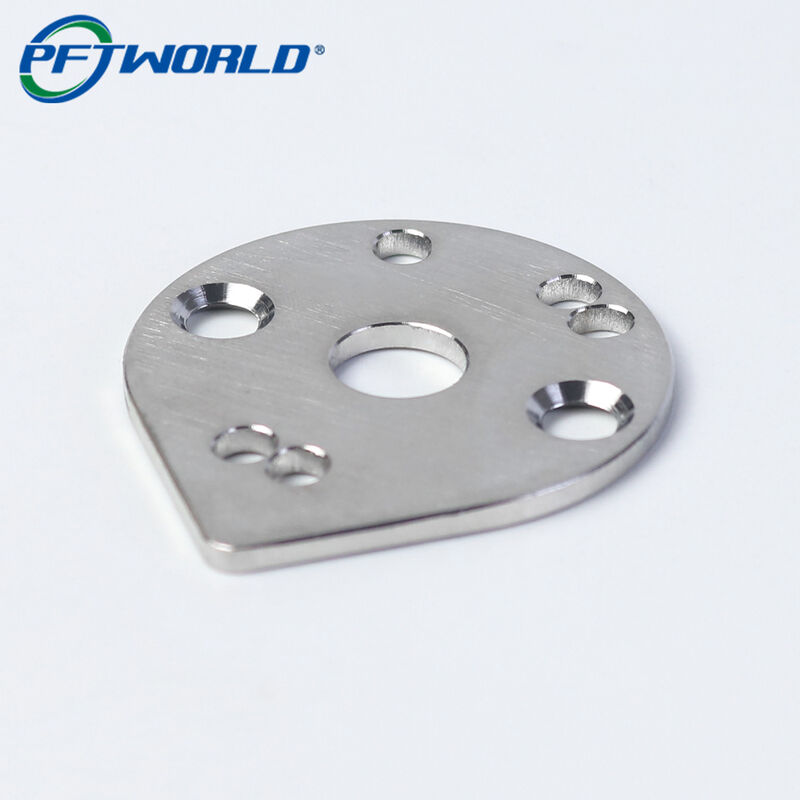
Partes de fresado CNC de acero inoxidable 304
, Cortar con láser piezas giratorias CNC
, piezas mecanizadas CNC de molienda pasivación
Corte láser, fresado CNC de piezas 304, rectificado y pasivado
¿Qué hace que el acero inoxidable 304 sea difícil de mecanizar?
El acero inoxidable 304 es uno de los materiales más solicitados en el mecanizado personalizado porque ofrece una resistencia y durabilidad excepcionales a la corrosión.
Pero desde un punto de vista de fabricación, el 304 es notoriamentecon forma de chicleSe endurece rápidamente, se sobrecalenta fácilmente y opaca las herramientas casi dos veces más rápido que el acero al carbono.
Durante la producción en fábrica, a menudo observamos:
El desgaste de las herramientas aumenta un 25~40%cuando las velocidades de alimentación no están optimizadas.
La perforación sin enfriar puede elevar la temperatura de corte más allá700 °C, causando charlas y rasgaduras.
Los bordes cortados con láser a menudo se formancapas de óxidoque deben retirarse antes del fresado de precisión.
Estos detalles afectan drásticamente la tolerancia de la pieza, la calidad de acabado y el tiempo de entrega.
Este artículo proporciona un flujo de trabajo completo y prácticocorte por láser → fresado CNC → molienda → pasivación¢basado en experiencias reales de las tiendas.
H2: Flujo de trabajo de fabricación paso a paso para piezas de acero inoxidable 304.
H2: 1. corte por láser de acero inoxidable 304: bordes limpios, baja distorsión por calor
El corte por láser es ideal para preparar los espacios en blanco antes del fresado CNC, especialmente para componentes basados en placas.
H3: Configuración práctica y datos de la producción real
Tipo de láser:1Laser de fibra de 0,5 kW
espesor de la hoja:1.5 mm 10 mm
velocidad de corte para 2 mm 304 SS:20°28 mm/s
Tolerancia típica:± 0,10 ∼ 0,20 mm
H3: ¿Por qué empezar con el corte láser?
Reduce el tiempo de mecanizado CNC en30 ∼ 50%
Minimiza el desperdicio de la extracción en bruto
Ideal para perfiles exteriores complejos o características de ranura
Consejo profesional:
Evitar el corte a alta velocidad en el 304; el calor excesivo causa la acumulación de óxido que posteriormente interfiere con la pasivación.
H2: 2. fresado CNC de acero inoxidable 304: herramientas, alimentación y parámetros reales de corte
Una vez que el blanco es cortado con láser, el fresado CNC maneja las características de precisión.
H3: Estrategia de herramientas y refrigerantes recomendadas
Las herramientasFabricación en la cual todas las materias utilizadas no estén incluidas en la partida 85
Agua de refrigeración:Fluido de refrigeración de inundación de alta presiónEmulsión de 8~10%
Evacuación del chip:En el caso de las empresaspara evitar el endurecimiento del trabajo
H3: Parámetros reales de alimentación y velocidad (probados en la tienda)
| Operación |
Velocidad del eje |
Tasa de alimentación |
Profundidad del corte |
| Freno lateral (Ø8 mm) |
Las partidas de los motores de la serie A |
Se aplicarán las siguientes medidas: |
0.15 ∙ 0,25 mm |
| Fresado de ranuras |
Las partidas de los motores de las categorías M1 y M2 |
Se aplicarán las siguientes medidas: |
0.1 mm |
| Perforación (Ø6 mm) |
Las partidas de los motores de las categorías M1 y M2 |
0.08 ∼0.12 mm/rpm |
¿Qué quieres decir? |
Estos números fueron probados en las máquinas Haas VF-2 y DMG de 3 ejes utilizando la hoja 304-2B.
H3: Evitar el endurecimiento del trabajo
La mayoría de las fallas ocurren cuando la alimentación es demasiado baja.
Regla de oro:
Si ves las virutas azules → la herramienta está frotando, no cortando.
H2: 3. rectificación para obtener una precisión dimensional y un acabado superficial
La molienda es esencial para las piezas 304 que requieren tolerancias ajustadas o acabados estéticos, especialmente para:
Los soportes de precisión
Mecanismos deslizantes
Superficies de contacto con sello
Componentes de hardware médico
H3: Resultados de las pruebas en tiendas reales
| Tipo de molienda |
La tolerancia alcanzable |
La rugosidad de la superficie |
| Grillado de superficie |
± 0,01 mm |
Ra 0,8 ∼1,2 μm |
| Mejora de la velocidad |
± 0,005 mm |
Ra 0,4 ∼ 0,8 μm |
H3: Problemas que vemos a menudo
Sobrecalentamiento → decoloración
Micro-rasguños debidos a un tamaño incorrecto de la arena
Deformación en placas delgadas 304
Solución:
Utilizaciónmolienda rica en refrigerantecon pases incrementales de0.005 ∼ 0,01 mm.
H2: 4. pasivación: el paso final para la resistencia a la corrosión
La pasivación elimina la contaminación del hierro y restaura la capa protectora de óxido de cromo.
H3: Proceso típico de pasivación
Desengrasamiento y limpieza por ultrasonidos
Tratamiento con baño ácido
Ácido nítrico 2025%a 50°C
O bienÁcido cítrico 6·10%a 30°C y 40°C
Enjuague con agua de DI
Secado por aire caliente
H3: Datos reales de ensayo
Después de la pasivación cítrica, 304 partes mostraron:
Resistencia a los saleros: 48 a 96 horas
Concentración superficial de cromo aumentada en35 ∼ 55%(Verificado por XPS)
H3: Se ha resuelto el problema del usuario
A muchos compradores les preocupa que sus piezas de acero inoxidable se oxiden después de sólo unas semanas de uso.
Esto suele ser causado por:óxido láser + residuos de mecanizado, no la calidad del material.
Una buenamolienda + pasivaciónEl proceso elimina esto por completo.
H2: Aplicaciones de piezas de acero inoxidable 304 cortadas por láser y fresadas por CNC
Componentes para el procesamiento de alimentos
Dispositivos médicos
Brackets para equipos marinos
Partes de automatización industrial
Las demás piezas
Los paneles de instrumentos y las carcasas
Estas industrias eligen el 304 debido a su equilibrio de resistencia, formabilidad y resistencia a la corrosión.
H2: Consideraciones sobre precios y pedidos
¿Qué influencias cuestan?
El espesor de la placa 304
Complejidad de las características CNC
Tolerancias requeridas
Nivel de acabado de la superficie
Cantidad del lote
Para referencia, un soporte típico de 304 (2-4 mm de espesor), incluido el corte por láser, fresado CNC, molienda y pasivación:
Precio unitario (grupo pequeño de 10 a 20 piezas): USD $9 a $18
Producción en masa (más de 500 piezas): USD $3.80$7.20
H2: Preguntas frecuentes
P1: ¿Es el acero inoxidable 304 bueno para el mecanizado CNC?
Sí, pero requiere alimentaciones precisas y gestión de refrigerante para evitar el endurecimiento del trabajo.
P2: ¿Necesitan las piezas cortadas por láser 304 un postprocesamiento?
Los bordes de óxido deben ser removidos antes del fresado CNC o pasivación.
P3: ¿La pasivación cambia las dimensiones?
No, la pasivación es un proceso químico sin recubrimiento y no añade espesor.
|
|
Tornería CNC, fresado CNC, corte láser, flexión, hilado, corte de alambre, estampado, mecanizado de descarga eléctrica (EDM), moldeo por inyección, impresión 3D, prototipo rápido, moldes, etc.
|
|
|
Aluminio: serie 2000, serie 6000, 7075, 5052 y demás.
|
|
Acero inoxidable: SUS303, SUS304, SS316, SS316L, 17-4PH, etc. El acero inoxidable es el acero que contiene el acero inoxidable.
|
|
Acero: 1214L/1215/1045/4140/SCM440/40CrMo, entre otros
|
|
El contenido de cobre en la mezcla de cobre y cobre se calcula en función de la mezcla de cobre y cobre.
|
|
Titanio: grado F1-F5
|
|
Plastico: Acetales/POM/PA/Nilón/PC/PMMA/PVC/PU/acrílico/ABS/PTFE/PEEK, etc.
|
Tratamiento de la superficie
|
Anodizado, laminado con perlas, pantalla de seda, revestimiento PVD, revestimiento de zinc/níquel/cromo/titanio, cepillado, pintura, revestimiento en polvo, pasivación, electroforesis, electro pulido, Knurl, láser/grabación/grabación, etc..
|
|
|
Se aplicarán las siguientes medidas:
|
La rugosidad de la superficie
|
Min Ra 0.1 ~ 3.2
|
|
En el caso de los productos de origen
|
Se trata de la norma ISO 9001:2015,AS9100D,ISO13485:2016,ISO45001:2018,IATF16949:2016,ISO14001:2015,ROSH,CE, etc.
|

Preguntas frecuentes
1¿Es usted un fabricante o una empresa comercial?
Somos una fábrica ubicada en Shenzhen, China, con 20 años de rica experiencia,
Las instalaciones completas, incluyendo equipos de inspección de calidad 3D, sistema ERP y 40 máquinas.inspección de calidad de las muestras y otros informes.
2¿Cómo conseguir un presupuesto?
Dibujos detallados (PDF/STEP/IGS/DWG...), incluidos la calidad, la fecha de entrega, los materiales, la calidad, la cantidad, el tratamiento de la superficie y otra información.
3¿Puedo obtener una cotización sin dibujos?
¿Puede su equipo de ingeniería dibujar para mi creatividad? Por supuesto, también estamos encantados de recibir sus muestras, fotos o borradores de tamaño detallados para una cotización precisa.
4¿Puede proporcionar muestras antes de la producción en masa?
Por supuesto, la tarifa de muestra es necesaria. Si es posible, se devolverá durante la producción en masa.
5¿Cuál es la fecha de entrega?
Por lo general, la muestra dura de 1 a 2 semanas y la producción por lotes dura de 3 a 4 semanas.
6¿Cómo se controla la calidad?
(1) Inspección de materiales - Verificación de las superficies y dimensiones aproximadas del material.
(2) Primera inspección de la producción - asegurar
dimensiones críticas en la producción en masa.
(3) Inspección de muestras: verificación de la calidad antes de la entrega al almacén.
(4) Inspección previa al envío: inspección al 100% por parte de un asistente de control de calidad antes del envío.
7Equipo de servicio postventa.
Si tiene algún problema después de recibir el producto, puede proporcionar comentarios a través de una llamada de voz, videoconferencia, correo electrónico, etc. dentro de un mes.Nuestro equipo le proporcionará soluciones dentro de una semana..


 ¡Su mensaje debe tener entre 20 y 3.000 caracteres!
 english
 français
 Deutsch
 Italiano
 Русский
 Español
 português
 Nederlandse
 ελληνικά
 日本語
日本語
 한국
한국
 العربية
 हिन्दी
 Türkçe
 indonesia
 tiếng Việt
 ไทย
ไทย
 বাংলা
বাংলা
 فارسی
فارسی
 polski



Calificación general
Imagen de calificación
La siguiente es la distribución de todas las calificacionesTodas las reseñas